RSA 21: Barrier Fence Regulations - EURO1, EURO2, RA1, RA2
Quick Overview: Which reflective class for which application?
| Application | Required reflective class | Product type | Legal basis |
|---|---|---|---|
| Longitudinal barrier Along the road |
RA1 sufficient | Any (EURO1/EURO2 with RA1 foil) | RSA 21 A 3.4 (4) |
| Transverse barrier Across the road |
RA2 mandatory | Any (EURO1/EURO2 with RA2 foil) | RSA 21 A 3.4 (4) |
| Intersections/junctions Longitudinal = Transverse! |
RA2 mandatory | Any with RA2 foil | RSA 21 A 3.4 (4) |
| Sidewalks/pedestrian areas | Same as road | Barrier fences (NO guide beacons!) | RSA 21 B 2.4 |
| Private/company premises | No RSA requirement | Any product, any foil | RSA does not apply |
| Fall protection (>1.25m depth) | Depending on location | Barrier fence grid required | DGUV, ASR A5.2 |
Reflective classes RA1, RA2 and RA3 (DIN 67520)
The reflective classes according to DIN 67520 indicate how well the foil reflects incident light back. The higher the class, the better the visibility at night.
RA1 - Low luminance
Retroreflection: min. 60 cd/lx/m²
Foil type: Type A (glass beads)
Standardowy: DIN 67520-2
Approved for:
- Longitudinal barriers
- Parking lots
- Private premises
RA2 - Standard (RSA 21)
Retroreflection: min. 180 cd/lx/m²
Foil type: Type C (microprisms)
Standardowy: DIN 67520-4
Required for:
- Transverse barriers
- Intersections
- All public roads
RA3 - High luminance
Retroreflection: min. 300 cd/lx/m²
Foil type: Type C (microprisms)
Standardowy: DIN 67520-4
Recommended for:
- Motorways
- Expressways
- Railway crossings
EURO1 vs EURO2 - Product types, NOT reflective classes!
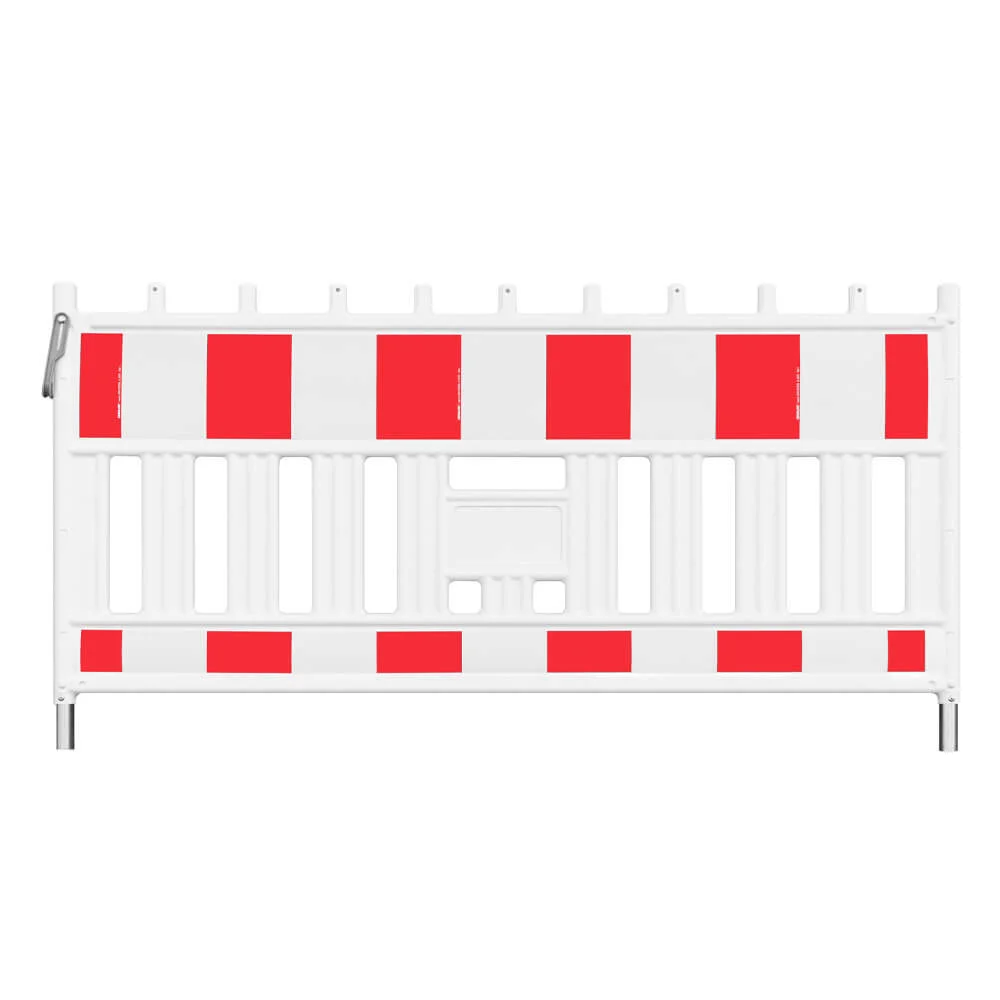
EURO1 Ogrodzenie barierowe
Product type: Manufacturer designation
Construction: Modular plastic system with cross struts
Stand tubes: Ø 40-42 mm
Connection: Plastic tilt brackets
Typical manufacturers: WEMAS, Schake, Nissen
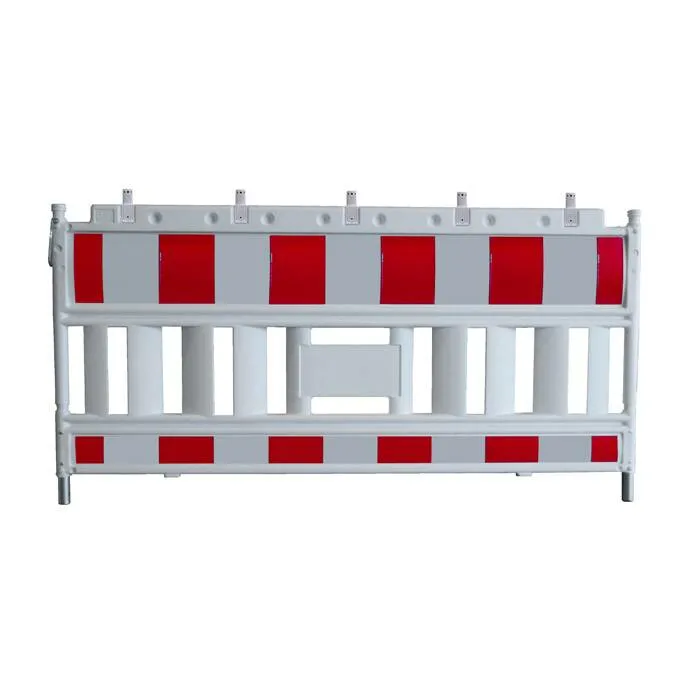
EURO2 Ogrodzenie barierowe
Product type: Manufacturer designation
Construction: Plastic with continuous steel stand tubes
Stand tubes: Ø 42 mm (steel, continuous)
Connection: Steel connecting brackets
Typical manufacturers: Schake, WEMAS, HMR
Correct ordering: Product + Foil
| Application | Order | Wynik |
|---|---|---|
| Transverse barrier on public road | EURO1 with RA2 foil | Approved |
| Transverse barrier on public road | EURO2 with RA2 foil | Approved |
| Longitudinal barrier | EURO1 with RA1 foil | Approved |
| Transverse barrier on public road | EURO2 with RA1 foil | NOT approved |
Sources: resorti.de, absperrshop.de
TL foot plates - Pay attention to BASt certification!
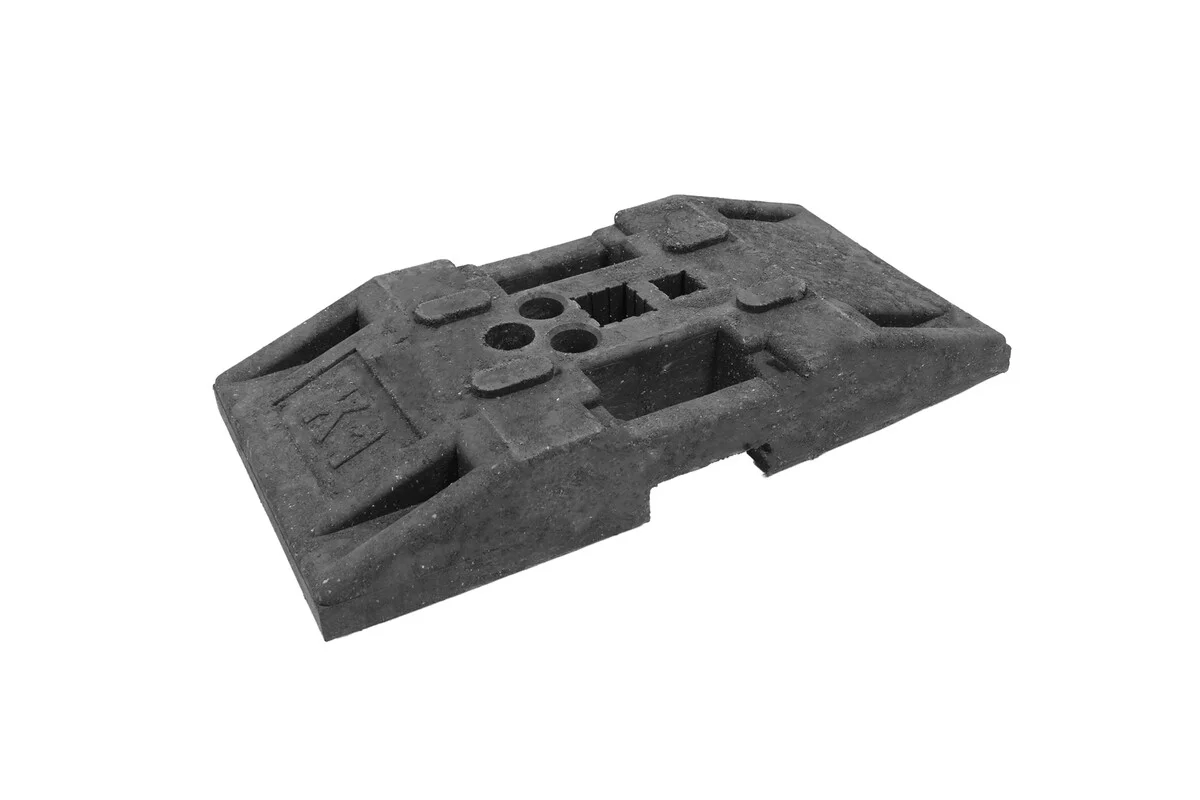
K1 foot plate (only TL-Aufstellvorrichtungen)
Example: WEMAS W-K1
Waga: min. 28 kg
BASt certification: Only TL-Aufstellvorrichtungen
Approved for:
- Traffic signs
- Barrier fence grids (EURO1/EURO2)
- Construction fences
NOT approved for:
- Guide beacons (missing TL-Leitbaken certification)
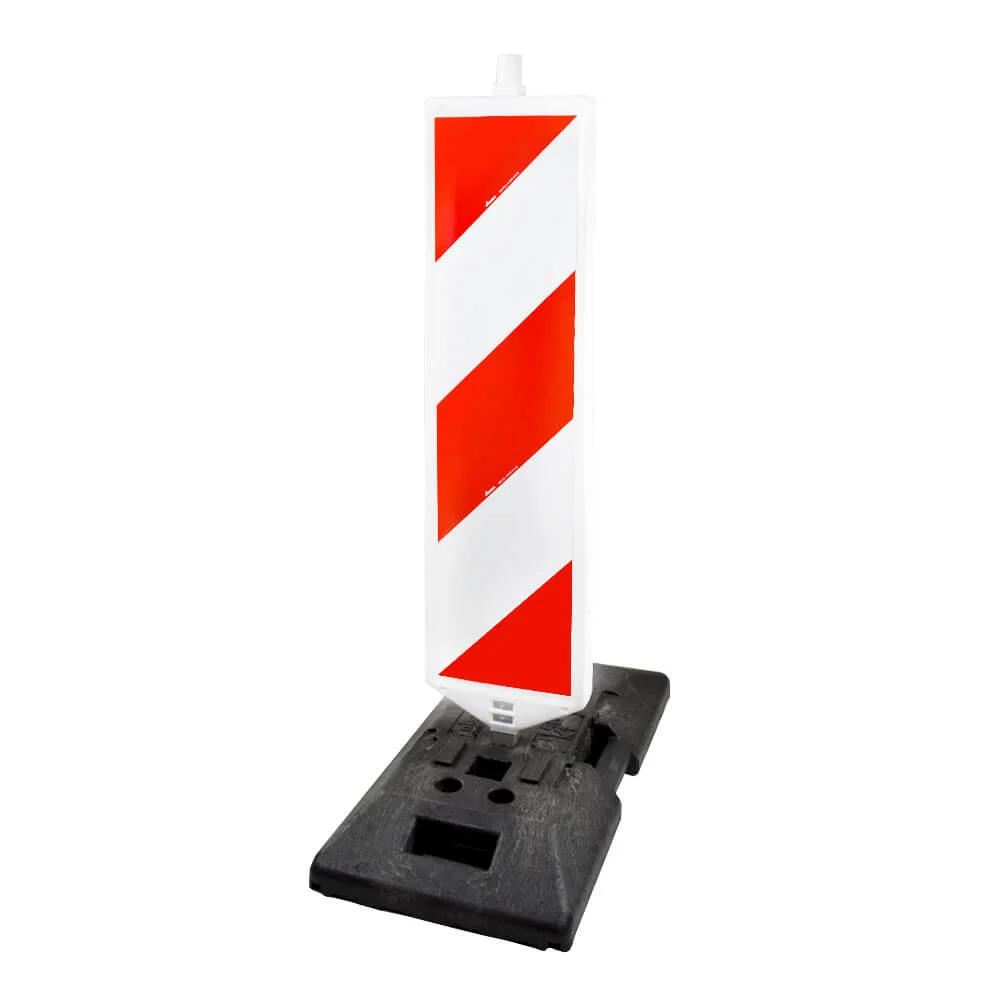
K1 foot plate (with TL-Leitbaken certification)
Examples: MB-TL 92, NISSEN (94 2K 013), baetz NOX
Waga: min. 28 kg
BASt certification: TL-Leitbaken + TL-Aufstellvorrichtungen
Approved for:
- Guide beacons
- Barrier fence grids (EURO1/EURO2)
- Traffic signs
- Construction fences
Weight classes according to TL mounting devices
| Class | Waga | Application |
|---|---|---|
| K1 | min. 28 kg | Standard for public roads |
| K2 | >50 kg | Motorways, long-term measures |
| K3 | 3× K1 stacked | High wind loads |
Sources: strassenausstatter.de (WEMAS K1), MB-TL 92, rsa-online.com
Additional requirements for transverse barriers
According to RSA 21, transverse barriers on roads require additional equipment:
Guide beacons
At least one guide beacon must be placed next to the barrier (RSA 21 Part A, Chapter 3.4.2). For oblique transverse barriers, at least 4 guide beacons per blocked lane.
Warning lights
Warning lights must be attached to each guide beacon for transverse barriers. For pedestrians and cyclists, yellow omnidirectional lights at 1m intervals (transverse) and 9m intervals (longitudinal).